November 17, 2026
Harvest 2026: Sector A, from tree to tin
Days of picking by hand, one afternoon at the mill, and about 30 litres of new oil. The 2026 harvest in our own photographs.
This year we picked one sector only: Sector A, the 26 trees nearest the house, each with a name and a place on our map. Here is how it went, step by step, in the photographs we took on the phone in our pocket.
Nets down
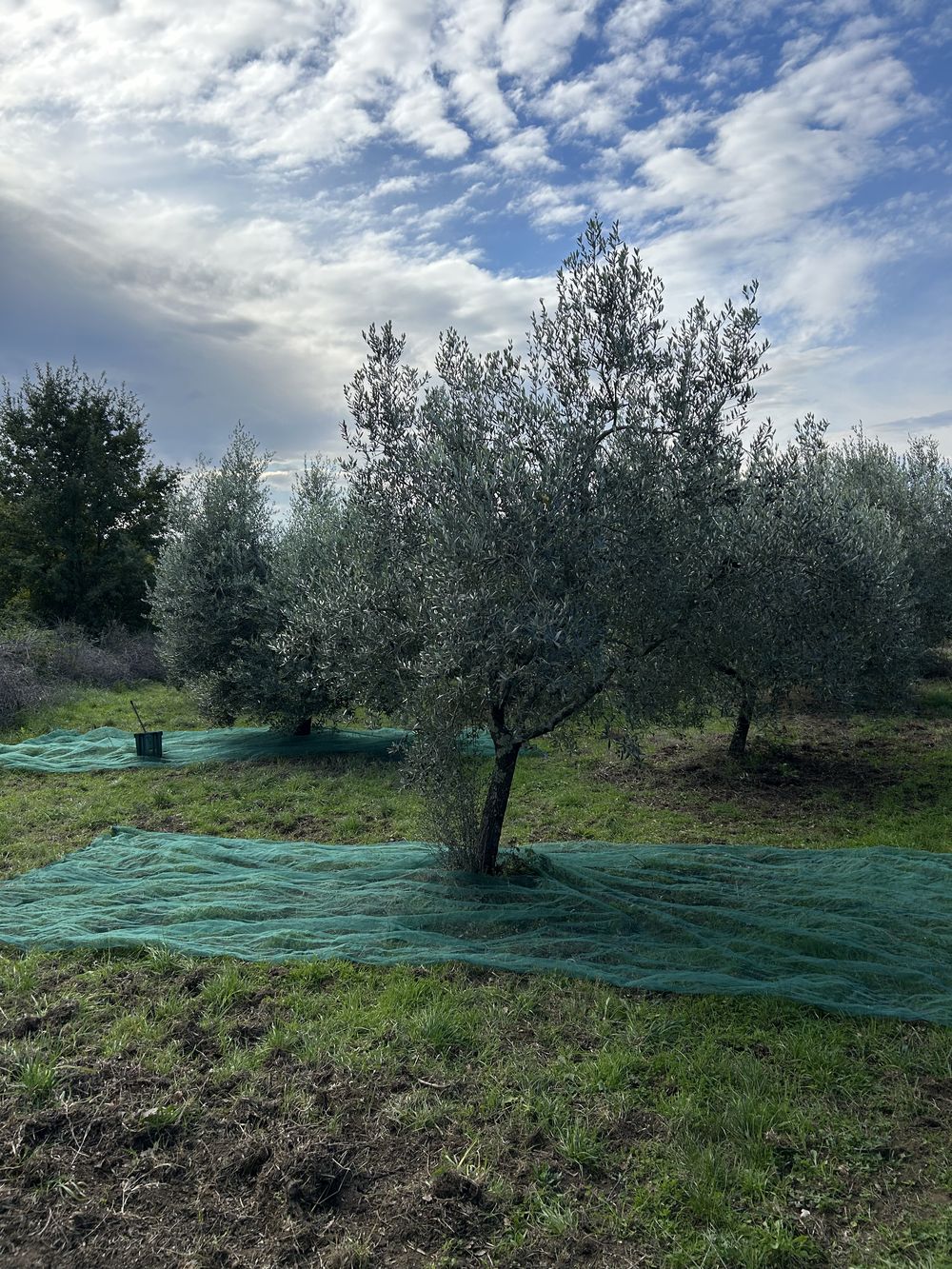
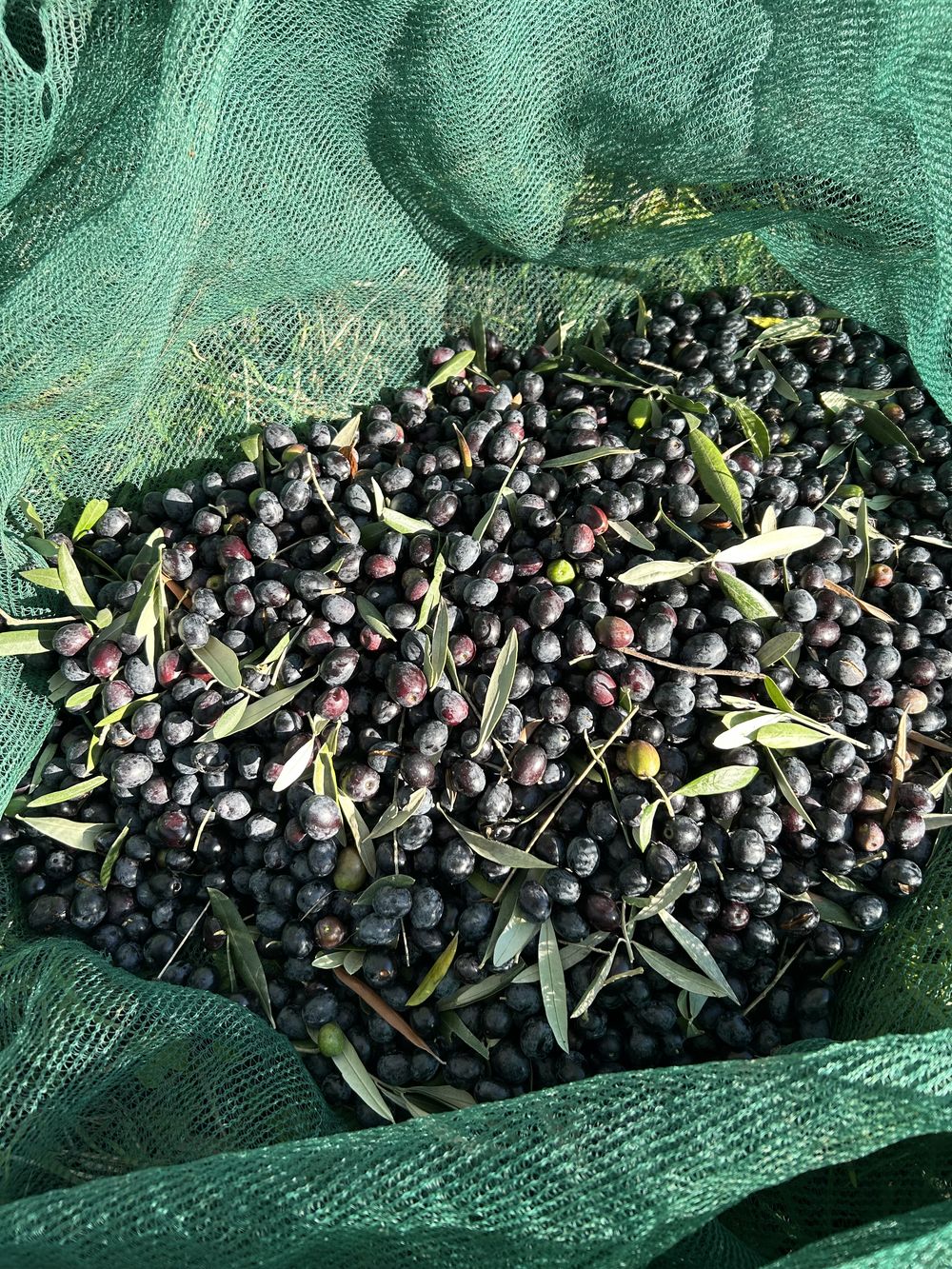
Picking starts with the nets. They go down under each tree so that nothing touches the ground: an olive that lies in the grass starts to ferment, and one bad olive is enough to spoil a crate. The first handful told us we had waited long enough. Most of the fruit had turned black, with a few violet and green ones still among them.
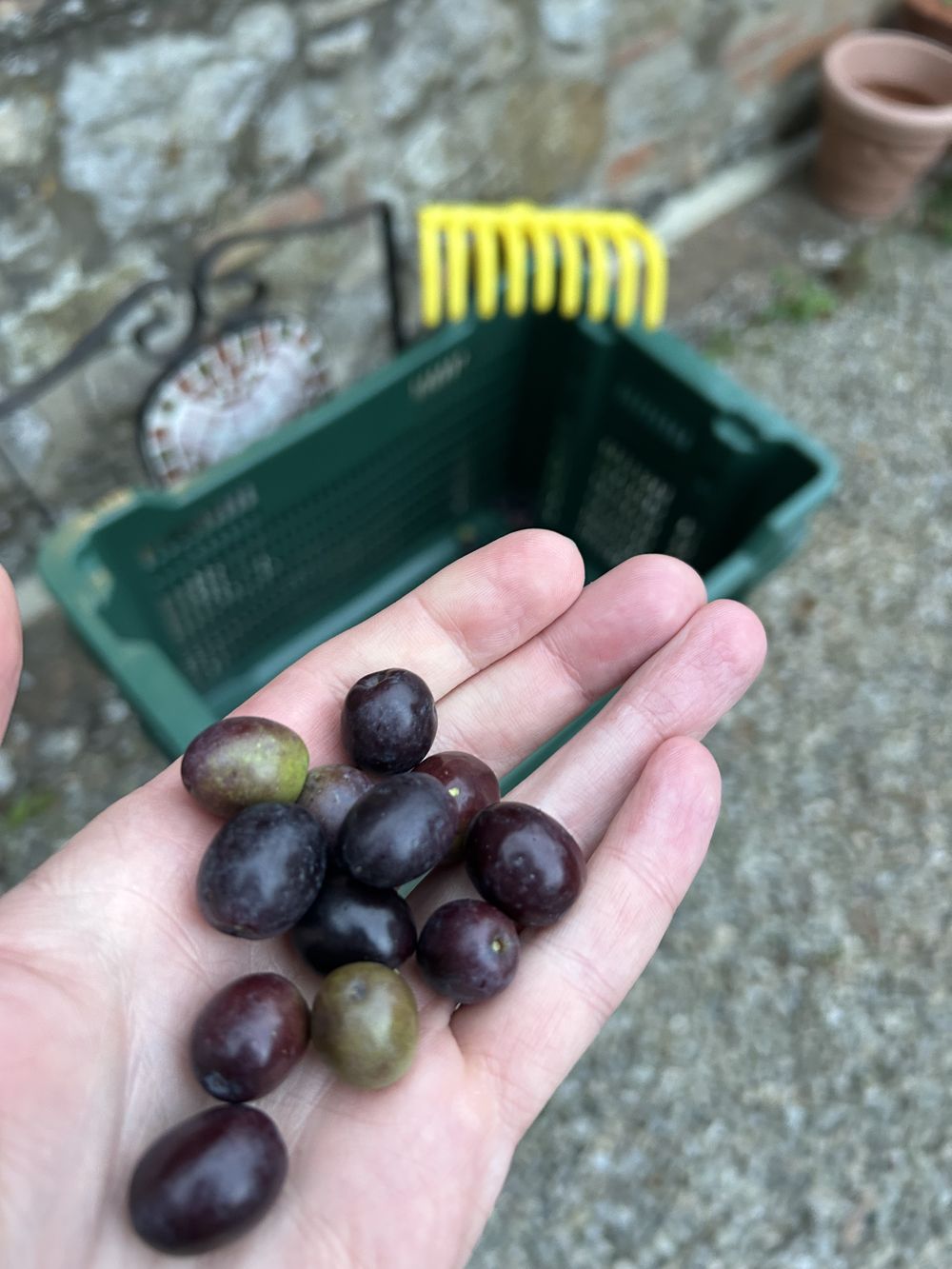
We pick ripe on purpose. Green olives give a sharper, more bitter oil and fewer litres; ripe ones give the round, gentle oil with sweet almond and a warm peppery finish that we wanted. It is a choice, not a shortcut.
By hand and with small rakes
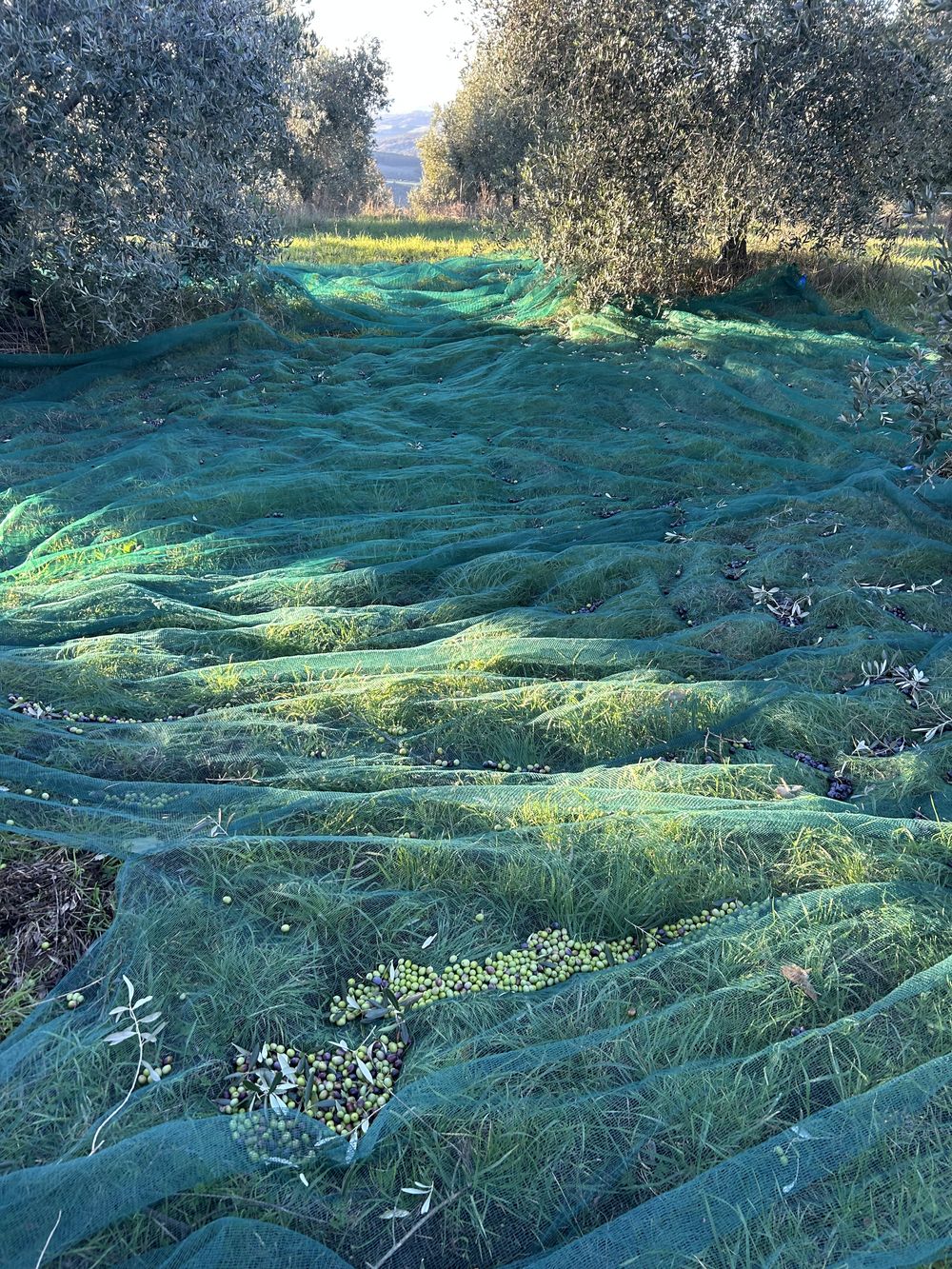
The olives come off by hand and with small plastic rakes, combed down onto the nets. The dog supervises. A good tree gives a bucket in an hour or so; a stubborn one takes the morning.
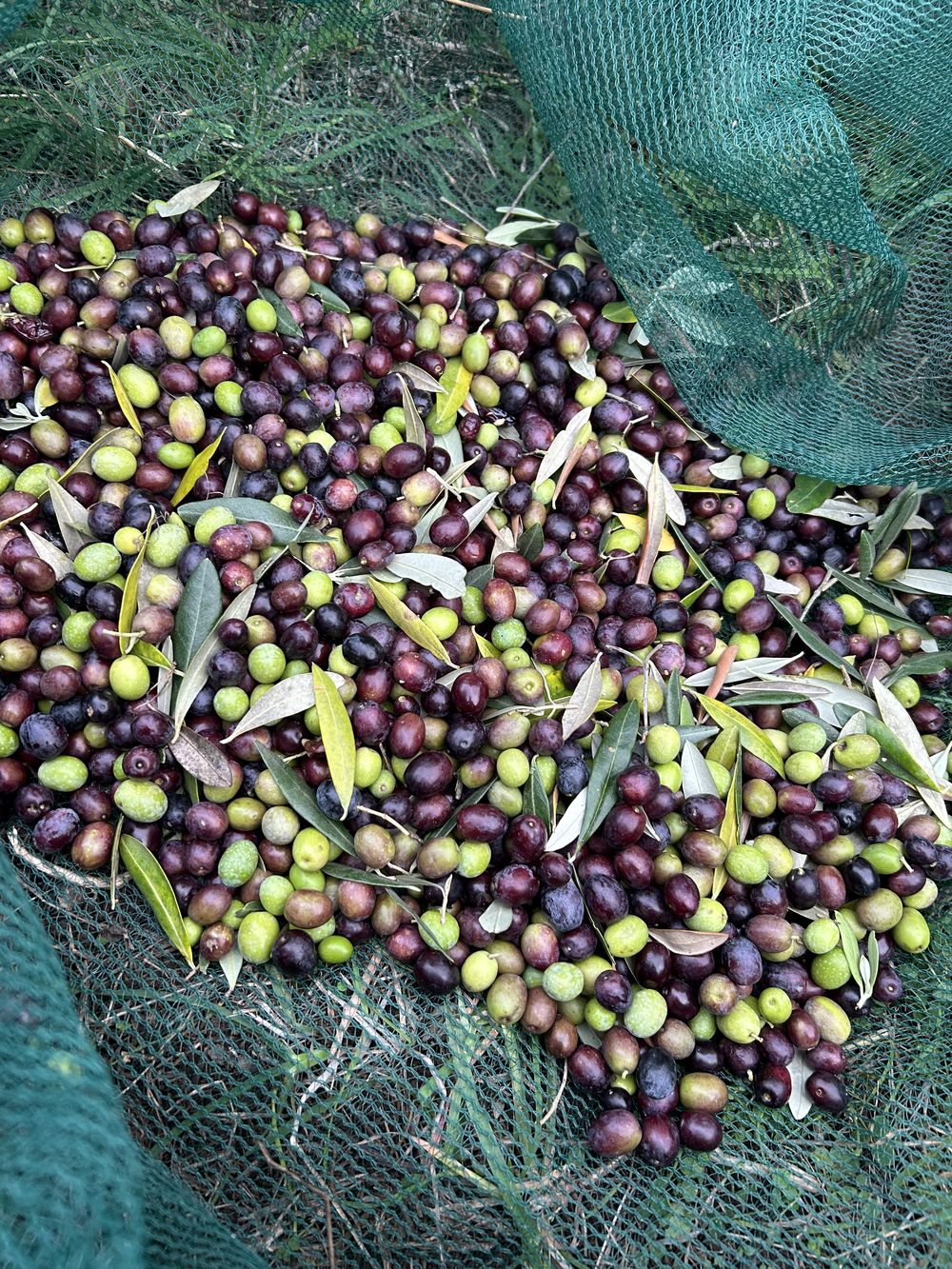
What a picked net looks like: mostly black, some violet, a few green, and leaves we sort out by hand before the crates.
To the mill
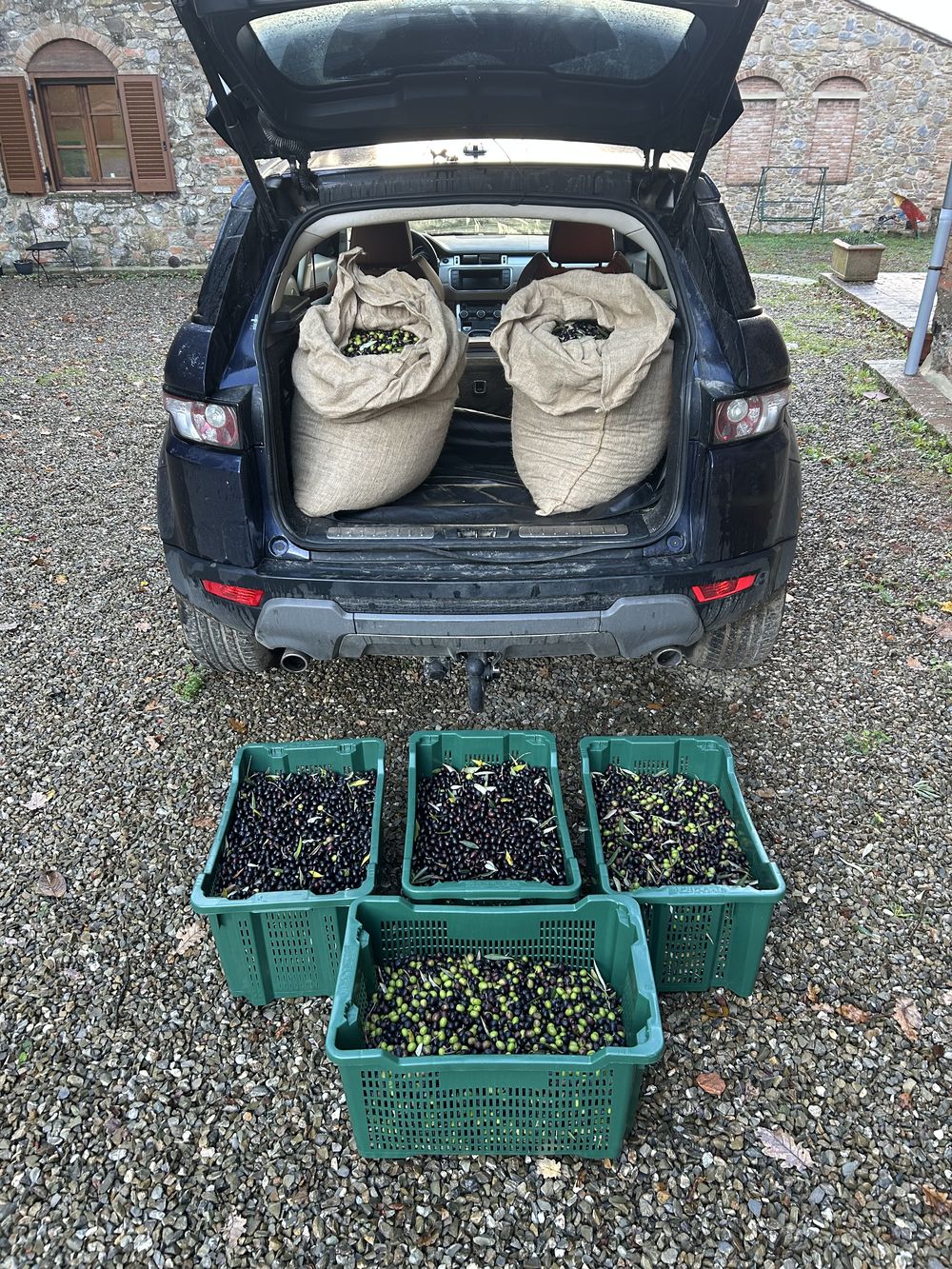
On the last morning everything went into the car, in ventilated crates and breathable jute sacks, and straight to Frantoio Sanminiatese near San Miniato. The fruit was at the mill the day it was picked.
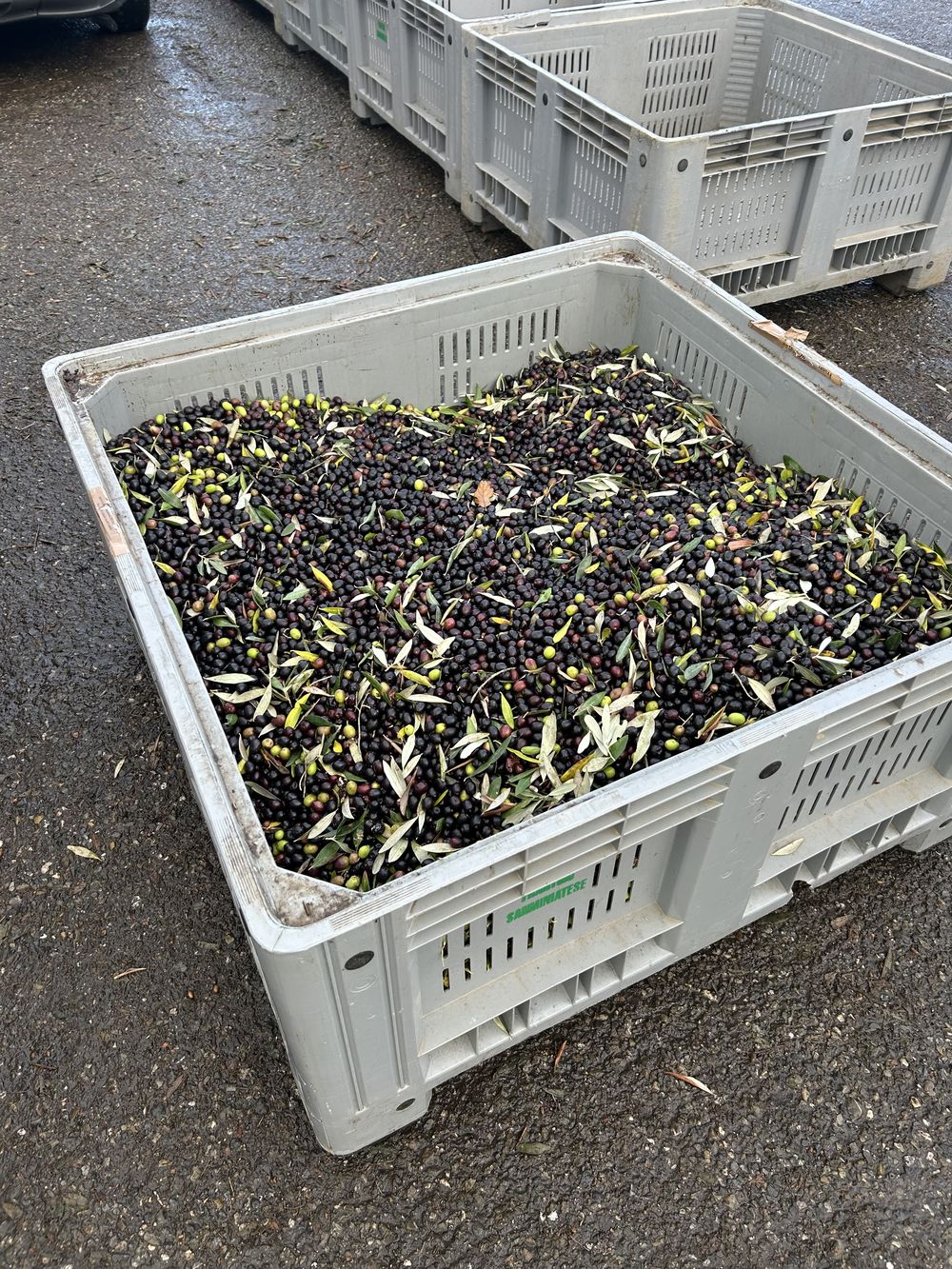
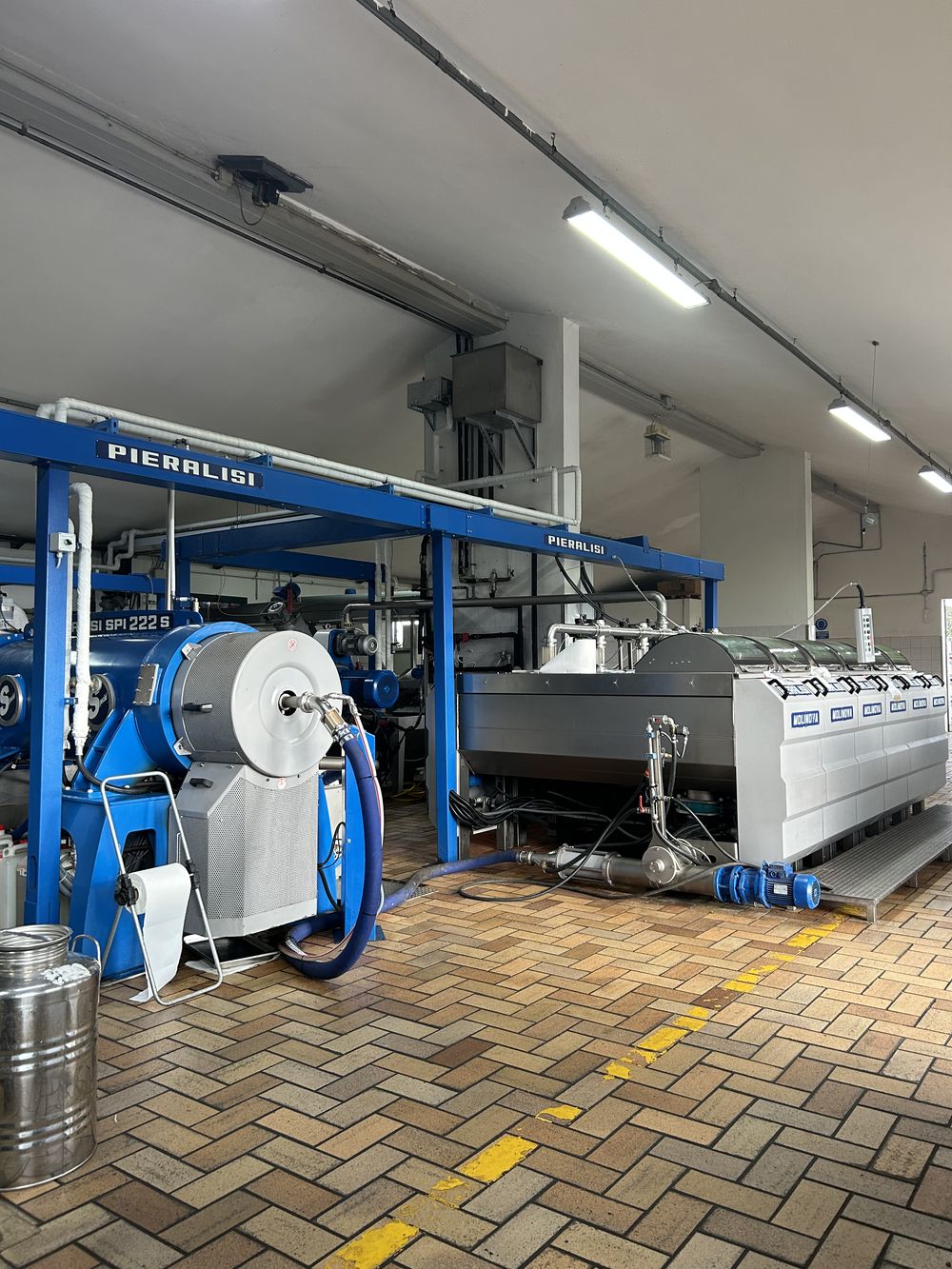
At the mill the olives are tipped into the hopper, carried up past a blower that takes the leaves off, and washed. Then they are crushed into a paste, stirred slowly (the malaxation) and spun in a decanter to separate the oil. All of it below 27 °C: that is what cold extracted means.
The first oil
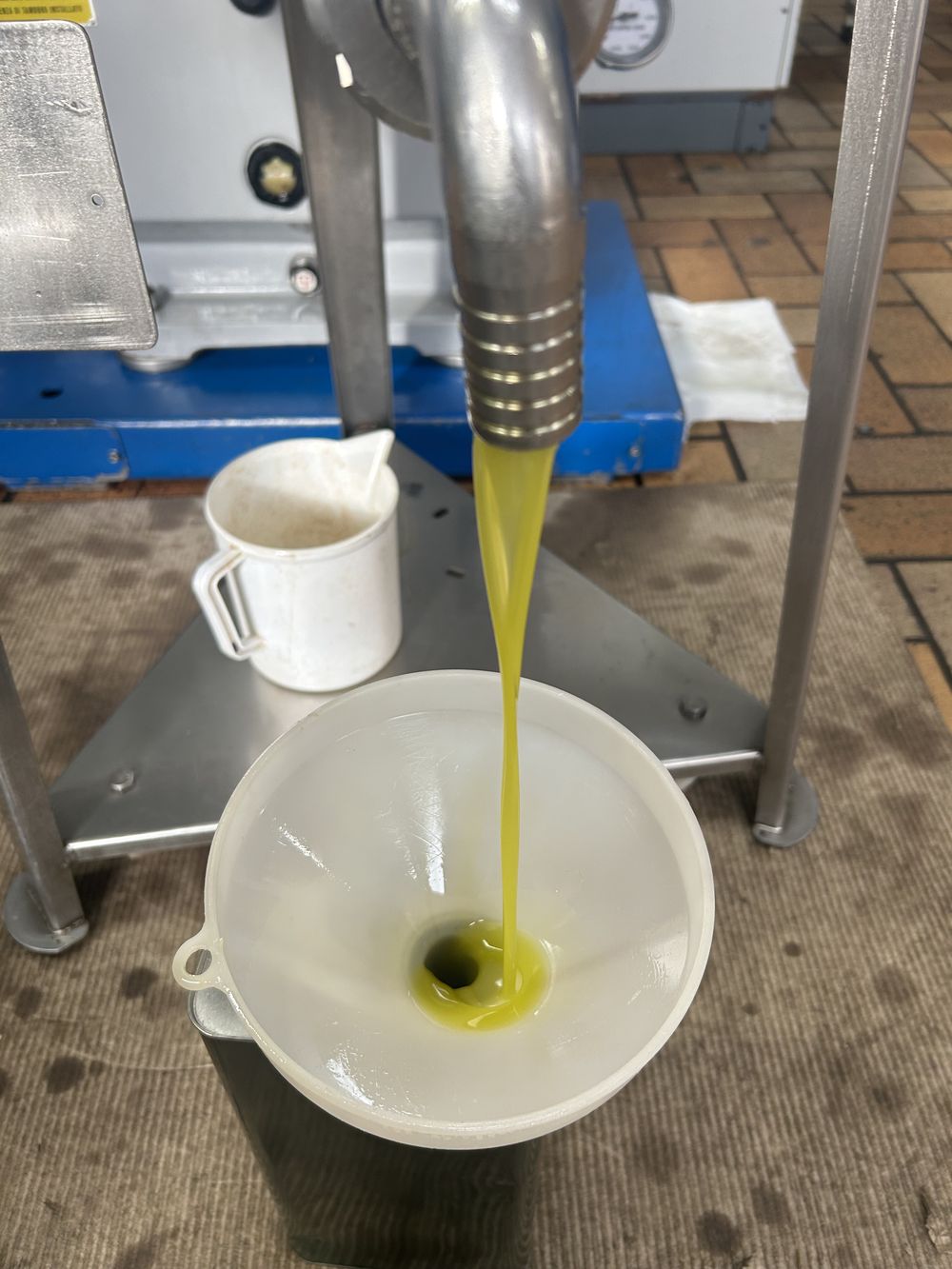
And then this. New oil is cloudy and bright green. Ours tastes of ripe fruit and sweet almond, with the pepper that catches the back of your throat. That catch is the polyphenols, the compounds cold extraction exists to protect.
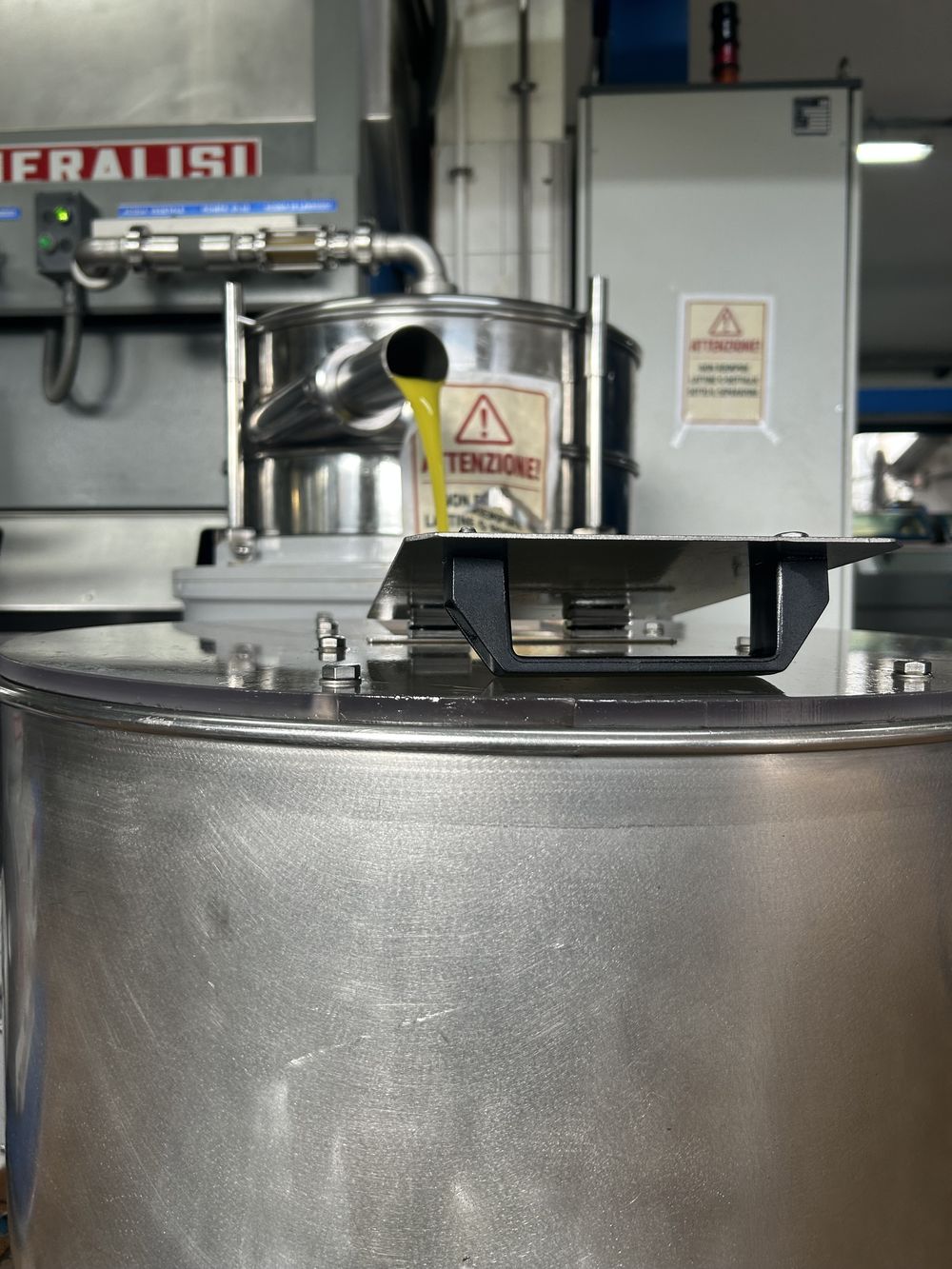
Sector A gave about 30 litres. Twenty-five of them went into 100 numbered tins, each with the name of one of the 26 trees, as gifts for the people who have helped us this year. The rest is for our own table.
From 2027: two pressings
This year everything was picked ripe, in one go. From the 2027 harvest we will press twice. A small early batch comes first, while most olives are still green: fewer litres, more of the polyphenols behind bitterness and pepper, a grassier and sharper oil. The main batch follows at full ripeness: the smooth, round oil above, our signature, and the base of Classico and the flavoured tins. When each one happens depends on the weather and the fruit, so the timing moves every year.
If you were given a tin: scan its code. You can tell us how it tasted, and reserve the 2027 harvest with 10% off.